

Written and medically reviewed by: Dr. Dharmi Kevadiya, MBBS, Skin & Hair Consultant
If your skin feels a little tired, a little uneven, or like it's stopped bouncing back the way it used to — you've probably heard someone say "just start using retinol." And they're not wrong. Retinol serum is one of the most well-researched ingredients in skincare, known for smoothing fine lines, refining texture, and fading dullness with consistent use.
A retinol serum helps renew skin cells, smoothing fine lines and texture over time. Retinol can also cause dryness or irritation when introduced too quickly. This beginner-friendly guide explains what retinol serum does, how to use it correctly, how often to apply it, its possible side effects and how to choose a suitable formula for your skin.

What Is Retinol Serum?
Let's start with the basics, because "retinol" gets thrown around a lot without much explanation.
- Retinol is a derivative of Vitamin A — one of the most studied skincare ingredients in dermatology, with decades of research behind it.
- Once applied, your skin gradually converts retinol into retinoic acid, the active form that actually does the work of influencing cell turnover.
- A retinol serum for face use is typically lightweight and fast-absorbing, often blended with hydrating or calming ingredients so it doesn't feel like a chore to apply.
- Here's something most people skip: not all "retinol" on a label is the same. You'll see retinol, retinal, or retinyl palmitate listed as the active ingredient — and these differ quite a bit in strength, stability, and how gentle they are on your skin.
Think of it less like a single product and more like a spectrum — knowing where a serum sits on that spectrum tells you a lot about how your skin will react to it.
Retinol, Retinal, Retinyl Palmitate and Tretinoin: What Is the Difference?
|
Vitamin A form |
Availability |
Relative strength |
General characteristics |
|
Retinyl palmitate |
Over the counter |
Mild |
Requires more conversion steps and may suit cautious beginners |
|
Retinol |
Over the counter |
Moderate |
Commonly used for texture, fine lines, pigmentation and clogged pores |
|
Retinal |
Usually over the counter |
Stronger than retinol |
One conversion step away from retinoic acid |
|
Tretinoin |
Prescription |
Strong |
Acts directly as retinoic acid and requires medical guidance |
The best option isn't always the stronger one. A mild formula you can use consistently may deliver better long-term results than a strong formula that repeatedly damages your skin barrier.

What Does Retinol Serum Do to the Skin?
Retinol influences how skin cells develop and renew themselves. It is commonly used because it may support several visible changes at the same time.
1. Supports healthier skin-cell turnover
Retinol supports the growth of new cells while promoting the more effective shedding of older surface cells.
- Smooth rough or uneven texture.
- Reduce dullness.
- Improve the appearance of post-acne marks.
2. Helps keep pores clear
Retinol does not physically close pores. Instead, it helps prevent the dead-skin buildup that can make pores clogged and more noticeable.
- Blackheads.
- Whiteheads.
- Mild comedonal acne.
3. Supports a more even-looking skin tone
By supporting surface-cell renewal, retinol may gradually improve the appearance of:
- Post-acne marks.
- Sun-related pigmentation.
- Uneven-looking skin tone.
- Dull patches.
- Age spots.
Pigmentation usually needs several weeks or months of consistent treatment. Irritation can also worsen dark marks—particularly in deeper Indian skin tones—so slow introduction is essential.

Retinol Serum Benefits for the Face
This is the part everyone wants to know: what does it actually do?
- Smooths fine lines — Retinoids support collagen-related activity in the skin, which over time helps lines appear less pronounced and skin feel firmer to the touch.
- Improves skin texture — By speeding up surface cell renewal, retinol gradually reduces that rough, uneven feel some skin develops with age or sun exposure.
- Evens out skin tone — It can help fade the appearance of sun-related discoloration and post-acne marks, though this takes patience — usually months, not days.
- Refines congested pores — Retinol promotes regular cell turnover, which lessens the type of accumulation that causes pores to appear bigger and more blocked.
- Restores visible radiance — Skin that looks dull and tired often just has a slower renewal cycle. Retinol nudges that cycle along, and freshness tends to follow.
- Supports long-term skin-ageing care — This is not an overnight fix. It's a gradual improvement tool, which is honestly part of why dermatologists trust it so much — it works with your skin's biology rather than against it.
A quick reality check: results depend heavily on the product formulation, how often you use it, your skin type. Retinol without SPF is like brushing your teeth and then eating sugar all day. It undoes some of its own good work.
Retinol Serum Uses: Who Can Benefit?
Retinol isn't a one-problem ingredient. It tends to show up as a solution across a fairly wide range of concerns:
- Early fine lines and wrinkles — often the first thing people notice around the eyes or forehead
- Uneven or rough skin texture — that "sandpaper" feeling some skin develops
- Dullness and reduced radiance — skin that looks flat rather than fresh
- Enlarged or congested-looking pores — especially on the nose, cheeks, and chin
- Mild post-acne marks — the lingering discoloration after a breakout has healed
- Uneven-looking skin tone — patches that are darker or lighter than the rest of your face
- Early loss of visible firmness — that subtle "skin isn't as bouncy" feeling
One important note: if you have highly reactive skin, active eczema, a rosacea flare-up, or a compromised skin barrier, it's worth talking to a dermatologist before adding a retinoid into the mix. Retinol is powerful, but it's not the right first step for every skin situation.

Retinol Serum for Beginners: How to Use It on Your Face
Use retinol at night unless your product or dermatologist specifically directs otherwise.
Correct application order
- Patch test first (before your first use): Apply a small amount behind the ear or along the jawline and wait 24–48 hours to check for irritation. Once your skin tolerates it, move on to the full routine below.
- Cleanse gently: Use a mild, non-scrubbing cleanser.
- Pat the skin dry: Avoid rubbing with a towel.
- Allow the skin to dry: Applying retinol to damp skin may increase penetration and irritation.
- Apply a small quantity: A pea-sized amount is generally enough for the entire face.
- Spread a thin layer: Apply across the forehead, cheeks and chin.
- Avoid sensitive areas: Keep it away from the eyelids, lips and corners of the nose.
- Apply moisturiser: Follow with a gentle, barrier-supporting moisturiser.
- Use sunscreen the next morning: Choose broad-spectrum SPF 30 or higher.
Retinol is a leave-on product, so you usually do not wash your face after applying it. Leave it overnight and cleanse normally the next morning.
When and How Often Should You Use Retinol?
Timing genuinely changes how well retinol works — and how comfortable your skin feels while it does.
- Retinol is a night-time ingredient. It's applied after cleansing and before moisturising, as part of your evening routine.
- Beginners: two nights per week is the right starting frequency — no more, even if your skin feels fine after the first try.
- Tolerant users: once your skin has adjusted, alternate-night use (every other night) is a comfortable middle ground for most people.
- Experienced users: frequency here usually follows the specific product's instructions, or guidance from a dermatologist based on your skin's history with actives.
A little dryness while your skin adjusts is normal and expected — that's your skin recalibrating, not a sign something's wrong.
Best Retinol Serum for Every Skin Type: Formula Comparison
The following products target different experience levels and skin priorities. Product suitability depends on your tolerance, existing routine and current skin condition.
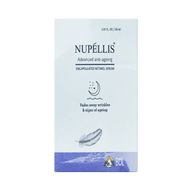
1. Nupellis Advanced Anti-Ageing Encapsulated Retinol Serum
May suit: First-time users looking for a hydration-focused vitamin A serum.
Formula highlights:
- Encapsulated retinyl palmitate.
- Hyaluronic acid.
- Aloe vera extract.
Why consider it:
- Hyaluronic acid keeps skin hydrated and plump.
- Aloe vera calms and soothes the skin.
- It may suit people with fine lines, dull skin, uneven texture, and early loss of firmness.
Best fit: Someone beginning an anti-ageing routine who wants to prioritise hydration and gradual introduction.
2. Cosderma Retinol Serum
May suit: Users targeting fine lines, dullness, uneven texture and pigmentation with a multi-active formula.
Formula highlights:
- Retinol.
- Skin-supporting peptides.
- Vitamin C.
- Hyaluronic acid.
Why consider it:
- Retinol targets texture, pores and visible ageing.
- Peptides complement firmness-focused care.
- Hyaluronic acid supports moisture balance.
- Vitamin C adds antioxidant and brightening support.
Best fit: For consumers seeking a multi-active retinol serum for dullness, uneven tone, fine wrinkles, and early symptoms of aging.
-16% Recommended
Cosderma culture Retinol Serum 30mlRs. 1,234.00Rs. 1,475.00
Buy now
Recommended
Cosderma culture Retinol Serum 30mlRs. 1,234.00Rs. 1,475.00
Buy now
3. Chosen Retinolite Serum
May suit: Users looking for encapsulated retinol with added humectants.
Formula highlights:
- Retinol encapsulated with hydroxypropyl cyclodextrin.
- Glycerin.
- Sodium PCA.
- Beta vulgaris root extract.
- Dimethyl isosorbide and dimethyl sulfone.
Why consider it:
- The delivery system is designed to improve retinol stability.
- Its lightweight texture may suit night-time layering.
- It targets fine lines, uneven texture and visible loss of clarity.
Best fit: Someone who wants a retinol-focused formula with hydration and delivery-supporting ingredients.
-2% Recommended
Chosen Retinolite Serum 30mlRs. 1,499.00Rs. 1,530.00
Buy now
Recommended
Chosen Retinolite Serum 30mlRs. 1,499.00Rs. 1,530.00
Buy now
4. Cosderma Medical Cosmetics Retinol Serum
May suit: Users targeting ageing, pigmentation, dullness and enlarged-looking pores.
Formula highlights:
- Retinol.
- Peptide.
- Hyaluronic acid.
- Vitamin C.
- Liquorice extract.
Why consider it:
- Combines a retinoid with peptides and brightening ingredients.
- Hyaluronic acid supports hydration.
- Liquorice and vitamin C are included for uneven-tone concerns.
Best fit: Experienced users with non-sensitive, resilient skin.
-19% Recommended
Cosderma Medical Cosmetics Retinol Serum 30mlRs. 784.00Rs. 975.00
Buy now
Recommended
Cosderma Medical Cosmetics Retinol Serum 30mlRs. 784.00Rs. 975.00
Buy now

Important Retinol Safety Tips
A few non-negotiables, regardless of which product you choose:
- Never apply retinoids to broken, inflamed, or irritated skin
- Avoid the eye and lip areas
- Introduce only one strong active ingredient at a time.
- Apply broad-spectrum sunscreen every single morning
- If you're pregnant or breastfeeding, consult a qualified medical professional before using any retinoid
Final Takeaway
Retinol serum isn't a miracle overnight fix — but that's actually its biggest strength, not its weakness. Used consistently, at the right frequency, with sunscreen as a non-negotiable partner, it genuinely delivers on smoother texture, a more even-looking tone, and visible support for early ageing concerns.
And if you're still unsure where your skin fits into all this — that's genuinely what a quick dermatologist consultation is for. Retinol works best when it's matched to your skin, not a generic routine. Book an online consultation with Dermatics' certified dermatology experts to get a retinol routine built specifically around your skin type, concerns, and tolerance level.
Medical note: This article is intended for general skincare education and does not replace diagnosis or personalised treatment from a qualified medical professional.


